

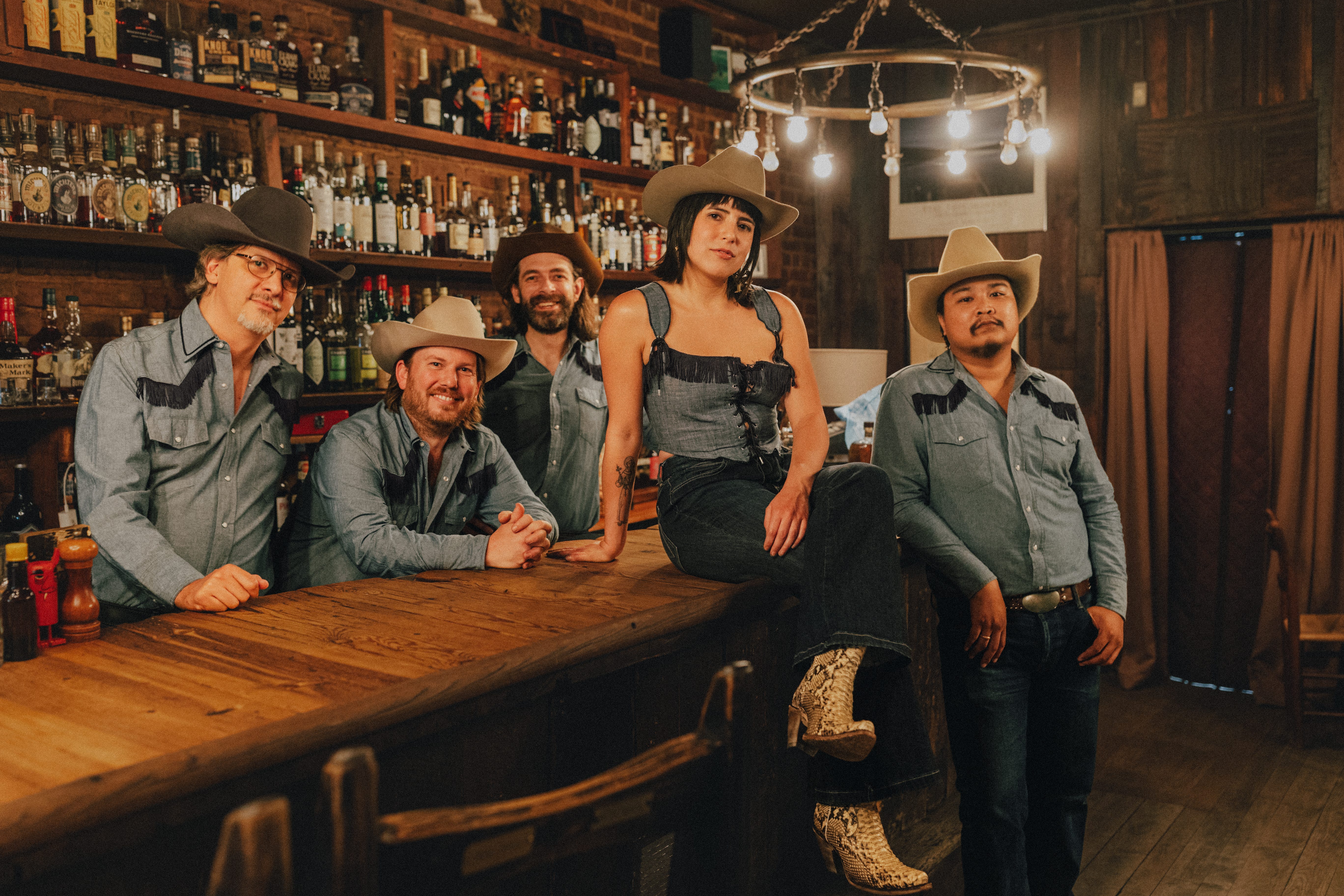
In Part 1, Ramona Martinez and I chatted about everything from tarot to the Beatles to Sondheim and the virtues and pitfalls of growing up abroad. In Part 2, we explore musical influences beyond country, performing in Spanish as a “no sabo” kid, and the impact of opera training on vocal and spiritual growth. Like a good conversation, a great musical performance should take you somewhere outside of yourself.
Rebecca Shields: Are there influences beyond country on the album?
Ramona Martinez: For Sure. My main one is a band called the Magnetic Fields. That guy can write a fucking song. Definitely Y2K pop music in general, like Britney Spears, Backstreet Boys, all that stuff. The Beach Boys [are a] big influence too.
Sometimes I feel like I write pop songs more than country songs. I have country chords, pop structure. Either has to start with a hook or a really good concept. We have a song called “You’re Not My Dad.” I had argued with my ex and got in a car and wrote this song in 20 minutes. “When you treat me like a baby/Oh, it makes me mad/I’m tired of being scolded because I did it bad/Know that I’m the best one that you ever had/I like to call you papi, but you’re not my dad.” That’s definitely pop.
RS: Did you grow up speaking Spanish?
RM: Oh, I’m a “no sabo” kid! I can have a conversation and be understood, but I will conjugate things incorrectly. I have enough of a vocabulary that I can explain something in a really roundabout way, and if it doesn’t work, I have Google Translate.
RS: You have a Spanish song on the album — do you perform more live?
RM: Yes, we do three Spanish covers. We do “Historia de un Amor.” My favorite version is by Pedro Infante, and it’s one of the most famous mariachi songs ever written, probably known by every single person in Latin America. And then we play “Volver, Volver” by Vicente Fernandez, which is another song every Latino knows. We do “El Rey” by Vincente Fernandez, another one that everybody knows. And then we do “Esta Herida” and another waltz that I wrote called “Nuestro Amor.” And then I have a tango in the works. The Texas Tornadoes is a tie we try to connect to sonically, like “Esta Herida.” That was definitely a huge inspiration for that song.
RS: How did you explore mariachi and Spanish-language music deeply?
RM: Vicente Fernandez was my in. I watched a Netflix show about him called El Rey. It took you through that world and introduced you to a lot of other famous mariachi singers. My resources were basically Spotify, YouTube, and then just listening to the music, reading Wikipedia, watching some of the films that these people starred in, because a lot of them were movie stars as well as singers. The fashion was a big influence, looking at the clothes, the charro suits, but also what women would wear.
The singing style was really what I studied more than anything else, learning the songs, rehearsing them for my solo sets and for the band. Mariachi has really helped me as a singer, because you really have to be open. When I started the band, I had not taken singing lessons, and I was not a very good singer, and I’ve been working for two years with an opera singer. Because I was forcing everything out. You just have to relax your lungs and learn how to use your head and your whole body as a resonating [chamber]. Singing mariachi really helped me just release. All of my songs, even the ones in English, are better because of studying mariachi and opera.
RS: That’s remarkable. So it’s physical training, but is it also spiritual?
RM: Oh my gosh. The whole journey of me becoming a singer is directly rooted to my childhood wounds of not feeling heard or feeling afraid to speak out, and that’s why I was so tight. I was afraid! I hadn’t started trying to be a professional musician until age 31. I’ve kind of always known that I was meant to do this, but I’ve thought, “No, it’s too hard” - not admitting that I was afraid to go for it until it became really clear that this is my vocation. This is 100% what I’m supposed to be doing with my life, and to do anything else would be dishonoring God and my ancestors. And the universe has given me all of these opportunities, with four men who are absolutely committed to the project and lovely human beings, to a town where people supported us to the point where we became a big fish in a small pond, and we’re able to make an impact. God has opened so many doors for me, and it is hugely connected to my soul’s journey into stepping into what I’m meant to be in this life. It’s very spiritual.
RS: You mentioned channeling a poem earlier…
RM: Yes…I told myself that I was bad at writing verse. Then when I wrote that Christmas country song six months before, it was good, and it felt like it came from outside of me. I prayed, got in the zone, and one day I wrote this poem that felt like it came from maybe Jesus or the Virgin Mary. It feels like it’s a message to me from God that said, “Don’t be afraid. You’re already there…in my hands and in my heart.”
RS: You’ve said you’re a folk Catholic. What does that mean?
RM: I was raised Episcopalian and around the plague, a little bit before, I started praying the rosary and praying to the saints. My grandparents, on both sides of my family, were Catholic, and so my parents were the broken link. Which is fine, there’s a lot of fucked up stuff about the Catholic Church. Folk Catholicism was a term that I adopted back then to describe my spirituality, because I was praying to Catholic saints and really feeling connected to God in a very profound way for the first time in my life. But I wasn’t actually Catholic, and I didn’t have any interest in converting, because of all the things I disagree with about the institution - like Catholic dogma. I don’t believe in Hell. I think you should get divorced. Women should be able to be priests. I spoke with a lot of friends of mine who were Catholic, and they were like, “Ramona, the Catholic Church is not just the priests or the official church, it’s the people who make up the church. And you have very similar views to people who grew up in the church who are just more progressive.” So I converted last Epiphany, and hilariously, I’ve stopped going to Mass and because I’m a real Catholic now, and I haven’t been praying to my saints as much. I know they’re there for me, and I do talk to God all day long. Like, constantly. I’m either asking for help or saying thank you. So all my saints are in there too. But, that’s my journey, and I continue to call myself a folk Catholic instead of just a Catholic because of my views. Some of them get really out there theologically. I believe in reincarnation. I believe it’s okay for you to work with other gods or deities, if that aligns with you.
RS: Mystic, maybe?
RM: Yes, I think that’s part of it, definitely. I think also all artists are in touch with the same thing that mystics are in touch with. It’s all connected.
One thing I should mention too, since it is today, is that performing mariachi and coming back to Catholicism are definitely my way of honoring my ancestors. My grandparents on both sides of my dad’s family are all passed, but they, I think, are super proud. And I feel really honored to be half Anglo and half Mexican, and to be an ambassador to both. I never claim to be a traditional, authentic mariachi performer, but to introduce people to how closely connected those two cultures are, especially the cowboy cultures, is so important, especially in today’s climate where you’re just thrown in an unmarked van if you’re Mexican or Latino of any kind.
RS: Is musical performance spiritual for you?
RM: It happens in two instances - when I’m clocked in solo and channeling the emotion behind a song, or when I’m playing with the band and the crowd is really into it. When we had our album release show here in Charlottesville, we had like 250 people come out. When I walked on the stage, I was actually really nervous because I had acid reflux really bad, and it kind of destroyed my voice. I walked out on stage, and I was like, “Oh my God.” The love that they had for us. We were gonna give it 110%. I was wearing leather chaps, and I sweat my ass off. I was kept going by the vibes. If the Smokes were to get huge and play amphitheaters, it will never feel like it felt like at the Southern. That’s the pinnacle of what we do. Nothing better than that.
A few days later, I realized I’d neglected to wrap up with my favorite line of questioning, so the following exchange took place over email. Like the timing of our conversation, that worked out for best too. It seemed only fitting that Ramona responded with a poem. And a Blues Brothers reference.
RS: Now for what I call the Full Casablanca. Since you are an old movie buff, I know you’ll know this scene. I’m convinced that the perfect interview is in the flashback in Casablanca to Rick, Ilsa and Sam in Paris, just before the Germans occupy the city. Rick asks, “Who are you really, and what were you before? What did you do, and what did you think?”
So…
Who are you really? What were you before?
What did you do, and what did you think?
RM: I am on a mission from God 😎 😎
It has always been this way, but didn’t know it til recently
Before, I used to beg him to speak to me
Like Joan of Arc
I so badly wanted to be of use
It turns out he has been singing to me all along
And I just didn’t have the ears to hear it